
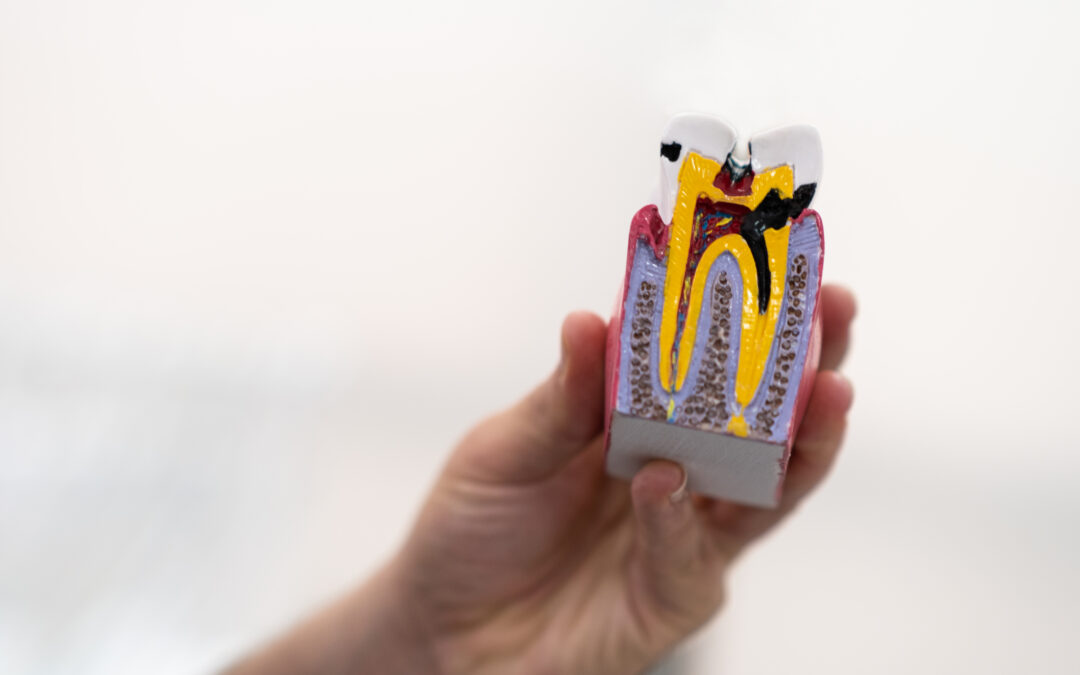
A cracked tooth can be easy to miss at first. You might only notice a twinge when you bite down, or a sharp pain with hot or cold food. Because the pain often comes and goes, many people put off seeing a dentist. But when you leave it unchecked, a crack can spread and get worse over time.
This guide walks you through the common symptoms, what causes a tooth to crack, and the treatment options your dentist may recommend. Knowing what to look for means you can get help early, before a small crack turns into a bigger problem.
What is a cracked tooth?
A cracked tooth is exactly what it sounds like: a break in the hard outer layer of a tooth. Cracks range from tiny surface lines in the enamel to deep fractures that reach the tooth’s root. Dentists sometimes use the term “cracked tooth syndrome” to describe cracks that are hard to spot on an X-ray but still cause real pain when you chew.
Some cracks stay small and cause no trouble at all. Others spread over time, especially if you keep chewing on that side or grinding your teeth at night. A crack that starts in the enamel can, over months or years, work its way down toward the nerve. So it’s worth getting any new tooth pain checked, even if you can’t see a crack yourself.
Common symptoms of a cracked tooth
Cracked tooth pain doesn’t always show up the same way for everyone, which is part of what makes it tricky to diagnose. Common signs include:
- Sharp pain when you bite or chew, especially when you release the bite
- Sensitivity to hot, cold or sweet foods that comes and goes rather than staying constant
- Pain that’s hard to pin down to one specific tooth
- Swelling or tenderness in the gum near the affected tooth
- A visible line or chip on the tooth’s surface, though many cracks aren’t visible at all
Because these symptoms can be so unpredictable, a cracked tooth is often mistaken for a cavity, gum problem or sinus issue. If you notice any of these signs, book a check-up rather than waiting for the pain to settle on its own, as, in some cases, it may come back worse.
What causes a tooth to crack?
Teeth crack for a range of reasons, and it’s often a combination of factors rather than one single cause. Common culprits include:
- Biting down on something hard, like ice, nuts, popcorn kernels or boiled lollies
- Teeth grinding or clenching, particularly overnight while you sleep
- A blow to the face or mouth, such as during sport or an accidental fall
- Large fillings that have weakened the remaining natural tooth structure
- Sudden temperature changes, like biting into something hot then drinking something cold
- Age-related wear, since teeth naturally become more brittle over time
Knowing the likely causes of a cracked tooth also helps your dentist plan the right treatment. For example, if grinding is behind the crack, a night guard may be recommended alongside repair work to protect the tooth from further damage.
Treatment options for a cracked tooth
The right treatment for a cracked tooth actually depends on the size, location and depth of the crack, along with how much healthy tooth structure remains. Here are some treatment options your dentist may discuss during your appointment with them:
- Dental bonding – a tooth-coloured resin fills small cracks and restores the tooth’s shape, usually in a single visit.
- Dental crown – a cap covers and protects a tooth with a larger crack, distributing bite force away from the weak spot so it doesn’t spread further.
- Root canal treatment – if the crack has reached the inner pulp of the tooth, this treatment removes the damaged and infected tissue before a crown is placed on top.
- Extraction and replacement – if a tooth is cracked below the gum line, or the damage is too extensive to restore, extraction may be recommended. A dental implant is often considered as a long-term replacement afterwards.
Results and suitability may vary by patient. Because of that, your dentist will only recommend a treatment path after examining the tooth closely and, in many cases, taking an X-ray or CBCT scan to see how far the crack extends.
When should you see a dentist?
If you notice sharp pain, ongoing sensitivity or visible damage to a tooth, don’t wait for it to pass. Cracks tend to worsen with time rather than heal on their own, and catching one early usually means simpler, less invasive treatment.
If the pain is severe, the tooth has been knocked out, or a large piece has broken away, this may be a dental emergency. If you’re in or around the Gosford, NSW area, our team at Digital Dental Implant Institute (DDII) can help. Contact our dentist straight away rather than waiting for your next scheduled appointment.
The takeaway on cracked teeth
A cracked tooth can range from a minor nuisance to a genuine dental emergency, so it’s never worth ignoring ongoing pain or sensitivity. Whether your treatment ends up being a simple bonding repair, a crown, or root canal treatment, catching a crack early gives you the widest range of options.
DDII’s team can start with a general dentistry to assess your tooth and recommend the right restorative treatment for your case. If you’re dealing with tooth pain or sensitivity, book a consultation with DDII in Gosford. We’ll take a proper look and talk you through what’s going on.
Book online today or call us on (02) 4325 5825.
Disclaimer: This information is general in nature and isn’t a substitute for a personal consultation. If you’re considering dental implants or any other treatment, book a consultation with DDII on (02) 4325 5825.
Frequently Asked Questions
Can a cracked tooth heal on its own?
No, tooth enamel can’t repair itself the way skin or bone can. A crack won’t heal without treatment, and it may worsen over time if left alone. Even if the pain settles down, it’s worth having the tooth checked, since the underlying crack is often still there.
Is a cracked tooth a dental emergency?
It depends on the severity. Sudden, severe pain, a large broken piece, or a tooth that’s become loose all warrant urgent attention. Milder, intermittent sensitivity is less urgent but still worth booking in for soon. If you’re unsure, it’s best to call and describe your symptoms so we can advise you.
Does treatment for a cracked tooth hurt?
Your dentist will use local anaesthetic where needed, and many patients experience only minimal discomfort with modern techniques, though this varies by case and by treatment type. Procedures like root canal treatment often have a reputation for being painful that doesn’t match most patients’ actual experience today.
How much does it cost to fix a cracked tooth?
Cost depends on which treatment your tooth needs, from simple bonding through to a crown or root canal. Because every crack is different, we recommend booking a consultation so your dentist can assess the tooth and give you a personalised quote, including your health fund rebate where applicable.